

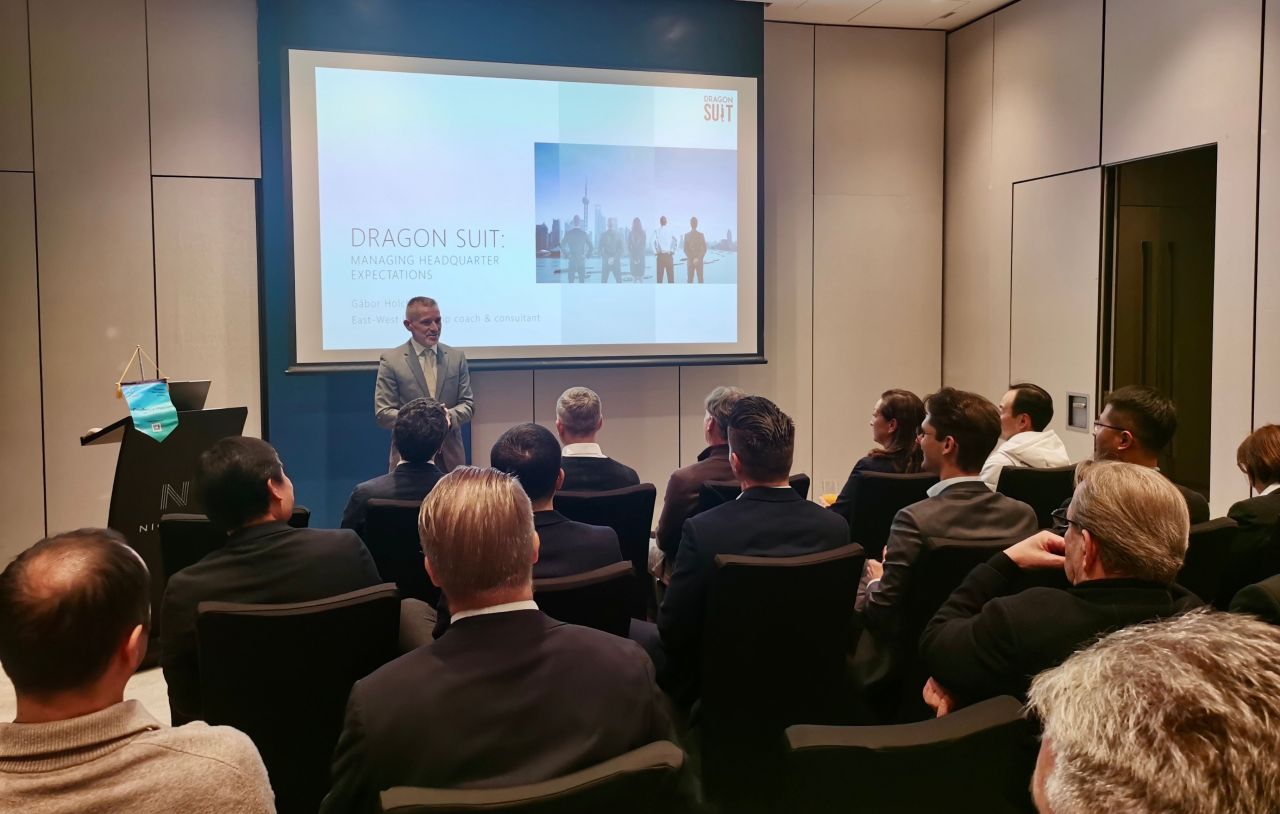

The man, exposed to various cultures at a young age, is a Hungarian with a deep love for communication, particularly drawn to China. It’s the ancient cultural richness of countries like China and India that captivates him. He finds joy in learning languages and excelling in communication.
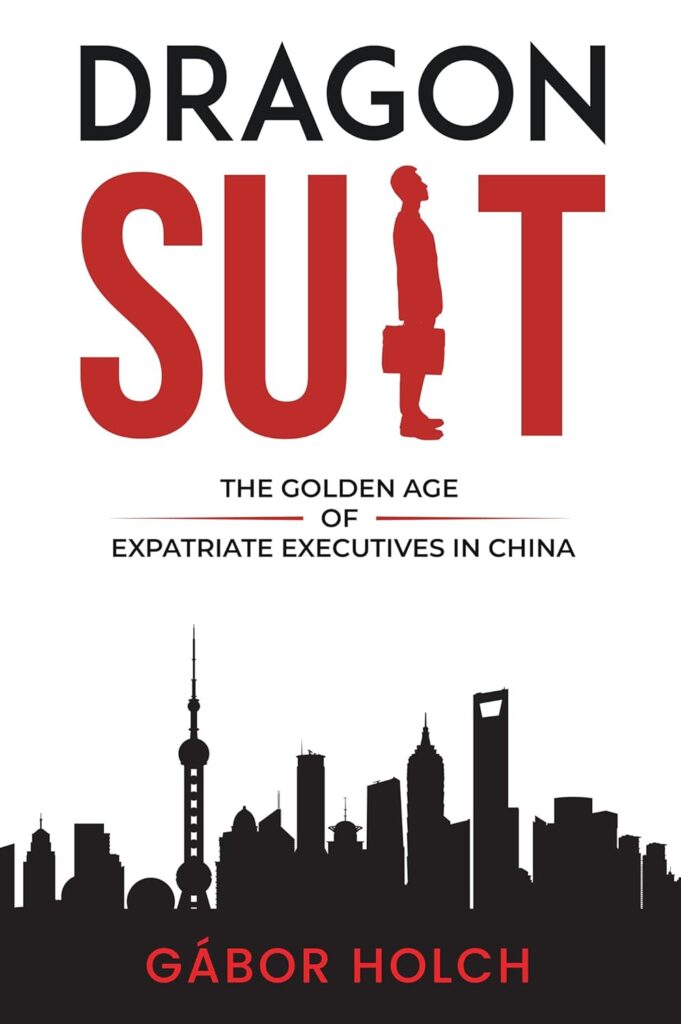
In his book “Dragon Suit,” he explores how business managers in China and other office cultures, from HR to executives, search for professionals to place in their companies. Featuring over 20 high-level individuals, from doctors to businesspeople, who have achieved prominence in society.
Gabor discusses the financial struggles of foreign countries like China. As a coach, he regularly engages with high-level managers, sharing both disastrous and successful cases. The book includes numerous stories of failure and success from clients aiming to do business in China.
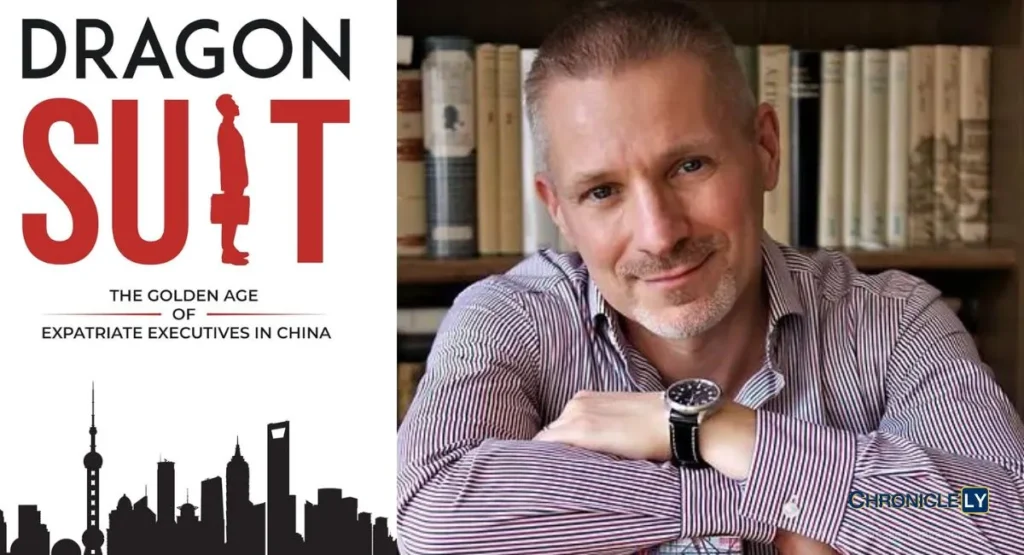
Interview with Gabor Holch
When did you first consider writing a book, and at what age, and why did you wait so long? Is there any specific reason? Tell me about you from the beginning and how it all happened to you.
Gabor: in a way, I have always been writing. At the house of relatives, one of my favourite toys was a typewriter. I already remember around the age of six, if I could find one, I started punching away for fun.
I wouldn’t say I waited long. I published in journals and conference papers already during my studies, and I published my first book based my graduate thesis. Since then, I published two books in English and an order two in my native language, Hungarian, and about a hundred articles.
As an executive coach, trainer and consultant, I am constantly bombarded with problems that people face, and both good and bad solutions. Writing is a great way to share these ideas without charging high fees. Some ideas naturally shape into articles, others into books.
You wrote a book, “Dragon Suit.” How did the inspiration stick in your head and how did it all start?
G: it started with 15 years of coaching international executives while living in Shanghai, and working in China and other east Asian countries. However, the problem with coaching is strict confidentiality: you cannot share the stories you hear. In recent years, I revisited former coaching clients and asked them to share their stories with me as a writer. Dragon Suit is a result of these interviews, which I structured into a book, reflecting a typical expert journey from the decision to relocate until an expat leaves China and somebody else takes their job.
What was the most inspiring story in the book that it forced you to write, and why? Do you have any favourite characters from this book?
G: The most inspiring character in the book might be Renata, a CFO from Brazil, working at the Shanghai branch of a large industrial company from her native country. Her China expat story is a fascinating journey, starting with a tough personal leadership style and the fairly bad chemistry with China, but ending with a moving transformation as a leader, and wonderful stories about her connection with her local team, the city of Shanghai and China itself.
How many characters are there in the book, and did you find it difficult to begin with? And thus, how did you overcome that?
G: I interviewed over a dozen executives for the book, and another half dozen people who support them: coaches, executive search professionals, human resources, managers, and even their doctors.
It wasn’t too hard to get these interviews, because as a coach, I support dozens of people on their expat executive journey every year, as a trainer I help hundreds, and as a conference speaker, I meet thousands of people. Each interviewee had the choice of having their name published, or appearing anonymously, which made it easier for people who wanted to share, intimate stories, or juicy details about their professions.
Have you ever thought about self-publishing your book, and why did you not take a risk about it?
G: Of course, I thought about it: all writers do. But ultimately, I love working with the kind of super smart, super strict teams that good book publishers provide. The process of an expert team trimming your manuscript can be painful but ultimately, it makes the book so much better. Publishing houses also supercharge other aspects of the book as a final product, such as the cover design, marketing and retail.
Writers must work hard to get a deal from a decent publisher, but in my future writing career, I will still go in that direction.
Why did you choose business? What was the reason behind it? And why not a fictional story to muse your readers?
G: I chose executive leadership as a topic because it surrounds me in my daily professional reality. In some of my keynote speeches, I start by saying: “A German, a Mexican, an Indian, and three Chinese walk into a meeting room. This is not a joke, this is my job.”
I have been experimenting with writing fiction since I was a teenager, and a few years ago I even took a creative writing course to improve my skills, where the project was a novel. Eventually, I will publish. But for now, I feel that real stories, serve my readers better. There are both horrible mistakes and respectable best practices in business. There is also a fair amount of scepticism towards multinational companies and their executives. I would like to show people who read my books and articles that anything can be done right, even the kind of work that large multinational corporations do.
What is an expatriate executive in business terms? Do you think there is Western influence on China? If yes, what are those influences?
G: In narrow legal terms, an expatriate executive is someone in a high-level leadership position at an international company, whose salary, bonuses, living budgets, and other benefits are paid from their home country. These are the kind of people who started flooding into China in the early 2000s.
Of course, the West had enormous influence on China. In the 1980s, around the time when my father was working in China as part of a Hungarian engineering team, the leadership in Beijing ended the country’s struggle as a state-planned economy, and Leninist state system, by opening up to the West and developed Asian countries like Japan and Singapore. They borrowed know-how in a wide range of sectors, from macroeconomic theory to how to manufacture cars, pens, and how to raise chickens. This teamwork between East and West is often forgotten as people write and talk about China’s miraculous rise as a modern economy.
Do you carry your pocket diary and pen? It is one of the most famous traditional ways of collecting notes. However, it still looks old-fashioned, yet it is so effective and stress-free. How do you collect ideas while writing?
G: I always walk around with a small notepad and pen, and if I carry a briefcase, I also have a larger-format notebook. Of course, these days, it might seem easier to take notes or make short voice recordings with your phone. But remember that for the human brain, handwriting is a much more creative process. In a notebook, you can create ideas “out of the box” the way you cannot in the linear text that you enter into your phone. You can draw, make charts, underline, circle, connect ideas with arrows, and so forth.
Like many writers and creatives, I also love the smell, touch, colour, and quality of some stationary products, and can walk around in shops selling them like a kid in a toy store. In my workshops, I use markers and post-its that make people think and share ideas playfully.
Which are the best and strongest economic cities in China, and what are the businesses that you have learned about?
G: Over 90% of foreigners who live and work in the country are in a handful of cities, including Beijing, Shanghai, Guangzhou, and Shenzhen, which is really one big conurbation, and recently a few cities west of the coastline, like Chongqing. For historical reasons, the Chinese government built almost the entire foreign-facing industry of the country in these places, either because they used to be the concession ports that traded with the outside world or, like in the case of Chongqing, because it was a national capital and industrial centre in the early 20th century.
So, if you live in one of the cities, you are surrounded with all industries, from investment banking to automotive and light industries, such as companies making computers, toys, and clothes.
I never differentiated between clients from different sectors, but for some reason, there are a couple of industries that love the coaching, training and advisory solutions we provide with my team. These are car companies, banks, technological firms, and suppliers. But we also worked for a dizzying variety of companies, from Steinway pianos to five-star hotels to Wall Street hedge funds. Learning about how people live and work, and how they build executive careers in these realms is the fun part of my job.
Every book has a storey and an author who wants to convey a message. In your case, what is the key message in your book that you want to convey to the readers?
G: On one hand, I simply wanted to show people how international managers work in China, because this country is still one of the most isolated in the world. There are more foreigners living in Tokyo than in the entirety of China. In my speeches, I often mention that there are more people working at State Grid, the national electricity provider in China, then there are foreigners in the country. On the other hand, many international companies and expat managers quietly fail in China, and some even create huge scandals when they make a big mistake. But there are also countless successful partnerships, whose stories I hear as a coach and consultant. I wanted to find a way to share those stories with people who work, or aspire to work in this country, so that they can do a better job for themselves, for their employees in China, and for all countries involved.
Why the name “Dragon Suit” and what is the message hidden in this book, especially in the business terms?
G: To find out the story of Dragon Suit, just find a way to read the foreword of the book. The dragon is powerful symbol in China, especially every 12th year that people call the Dragon Year according to their traditional calendar, including this one, 2024. As for the Suit, it is a metaphor of high-level business decision-makers, the ones I meet every day. As for the rest, I don’t want to spoil it for you in case you have a chance to read the book.
I know that China is the second-largest economic country that has power and money. What are the most significant recent developments in China, in your opinion?
G: China is the first, the second, the fifth, the twentieth and so on, depending on which indicators you watch: population, GDP, GDP per person or something else.
I arrived in China in 2002, and at that time the big national program was integration into the global economy, as well as other areas of human activity like sports, culture, tourism, and so on. The leadership at that time called this “the coming-out party of the nation.” This mood lasted until the mid-2000s.
If you want to understand what is happening in China right now, you must digest a mixed picture. In some areas, like incorporating and financing international companies, China continues to open up to the world. But in others, the leadership decided that China should limit foreign exposure. Examples for this are China’s participation in scientific cooperation and education, the sharing of digital data, imported literature and art, or large-scale tourism in and out of the country. This also coincided with a dramatic decrease of the number of foreigners living and working in the country.
So, in comparison to 10 or 20 years ago, foreigners, visiting, or moving to China will find a more challenging environment, and fewer fellow foreigners, but also more opportunity to put themselves to the test in a new environment, and learn an awful lot about how work and life are conducted in this enormous nation.