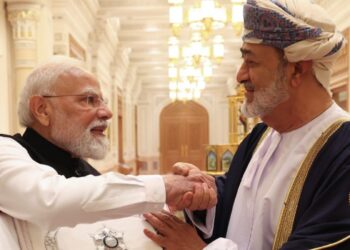

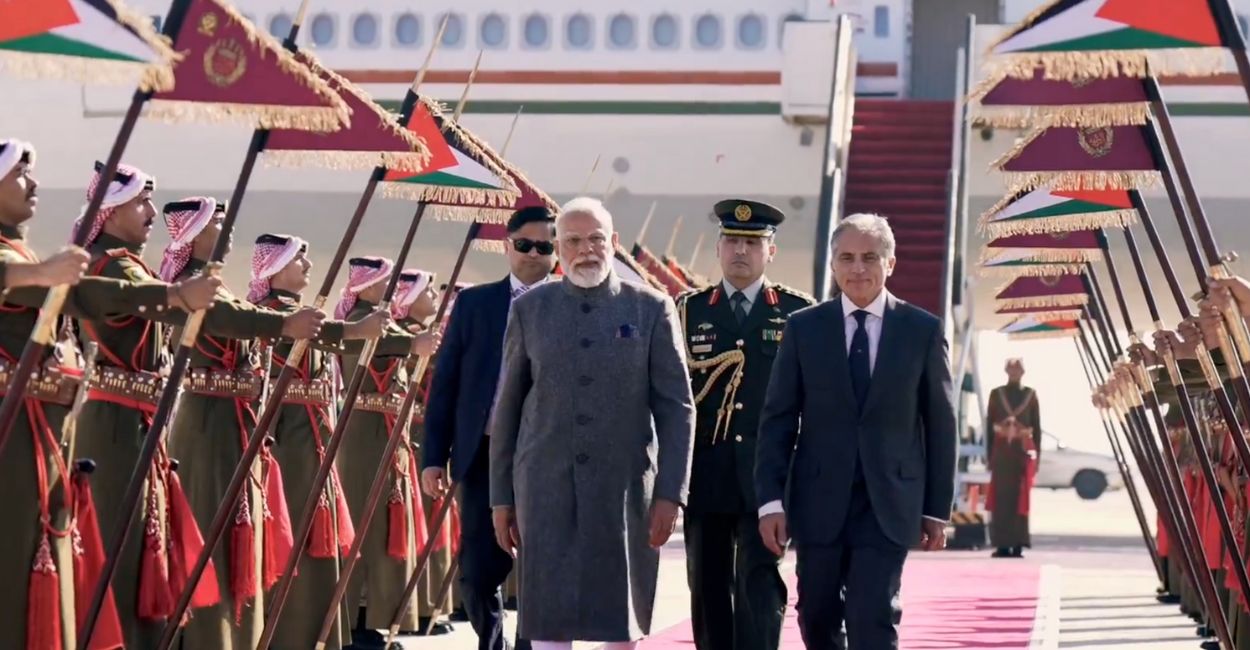
Prime Minister Narendra Modi began his three-nation tour on December 15 with a landmark stop in Jordan, and the visit carried both history and intent. This was Modi’s first full bilateral visit to the country and the first by an Indian prime minister in 37 years. More importantly, the trip coincided with 75 years of diplomatic relations between India and Jordan, which were established in 1950. Therefore, the visit sent a strong message about India’s growing engagement with the Middle East.
Prime Minister Modi Visits Jordan After 37 Years
PM Narendra Modi while speaking to PTI: “I am embarking on a three-nation visit to the Hashemite Kingdom of Jordan, the federal Democratic Republic of Ethiopia and the Sultanate of Oman, three nations with which India shares both age-old civilisational ties, as well as extensive contemporary bilateral relations.”
Although Indian prime ministers had not made a full bilateral visit to Jordan in decades, the relationship never stood still. Over the years, India and Jordan maintained steady cooperation through diplomatic exchanges, trade, and cultural links. However, this visit gave both nations a chance to reset priorities and update their partnership for current global challenges. As a result, expectations from the talks were naturally high. During his visit, Modi met King Abdullah II of Jordan to review the full spectrum of bilateral ties. The discussions covered trade, security, regional stability, and people-to-people relations. At the same time, both leaders spoke openly about the ongoing Gaza conflict, underlining the need for restraint, humanitarian access, and dialogue. In addition, counter-terrorism cooperation featured prominently, reflecting shared concerns over regional security.
If you are talking about what the purpose of these visits is, it is just to give the relationship a clear direction. As per Modi, he unveiled an eight-point plan, and his simple aim is to expand cooperation across key sectors. What does this roadmap focus on? However, it is simple: trade growth, fertilisers, information technology, healthcare, education, tourism, startups, and skill development. This resulted in both sides signalling their intent to move beyond traditional diplomacy and build practical partnerships that deliver economic value.
The visit also produced five important agreements that added substance to the talks. These included cooperation in renewable energy. Also, water management, cultural exchanges extending through 2029, twinning of heritage sites, and digital solutions. Each agreement addressed a specific need, and together they reflected Jordan’s strengths and India’s technological and institutional expertise. Consequently, this two-country bond is simply the partnership that now rests on a stronger and more diversified foundation. So, there are two major themes in this visit. The first one is energy, and the other one is water security. Jordan faces water scarcity and energy challenges, while India brings experience in solar power, digital monitoring, and sustainable infrastructure. Therefore, collaboration in renewable energy and water management holds real promise. These areas are not just strategic but also essential for Jordan’s long-term development goals.
What do you think of this union trade expense? Where could it reach yearly? Trade between India and Jordan currently could exceed $3 billion annually, and both sides expressed interest in expanding this figure. Fertilisers, pharmaceuticals, textiles, and engineering goods remain key areas of exchange. Beyond economics and security, the visit highlighted the importance of cultural ties. Agreements on cultural exchange and heritage site twinning aim to deepen mutual understanding. India’s historical connections to the region and Jordan’s rich archaeological heritage offer a natural platform for collaboration. As a result, tourism and academic exchanges are expected to grow in the coming years.
Back home, some opposition leaders questioned the timing of the visit, as it took place during India’s parliamentary session. However, the government defended the trip, stating that such overseas engagements are part of routine diplomacy and long-term national interest. Moreover, officials emphasised that global engagements do not disrupt domestic governance and often strengthen India’s international standing. This Jordan visit also fits into India’s wider Middle East strategy. India has steadily expanded ties with Gulf nations, Israel, and regional partners through trade, energy cooperation, and strategic dialogue. Jordan, with its balanced diplomacy and regional influence, plays an important role in this network. Therefore, strengthening ties with Amman supports India’s broader goals in the region.
As Modi’s visit concluded, both sides appeared optimistic about the future. The agreements signed, combined with the eight-point roadmap, offer a clear path forward. While challenges remain, the renewed political momentum could translate into concrete outcomes over time. Ultimately, the visit marked not just an anniversary celebration but a turning point in India–Jordan relations.