

The Marathon of the Soul: Understanding the Walk’s Core Horrors The Road Without End. Dissecting the Soul-Crushing Conclusion of The Long Walk Ending Explained
Stephen King’s (writing as Richard Bachman) The Long Walk is not a story about survival; it is a meditation on endurance in the face of inevitable, state-sanctioned cruelty. Set in a near-future, totalitarian American regime, the annual Long Walk is a brutal competition where one hundred teenage boys must maintain a walking speed of at least four miles per hour. Slowing down results in a warning; three warnings result in being ‘ticketed’—a euphemism for immediate execution by the armed soldiers who escort them. The prize for the last boy standing is anything he desires for the rest of his life.
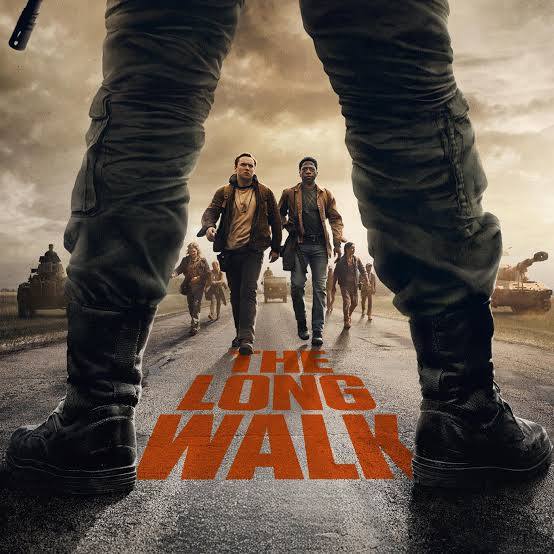
The genius of the novel lies not in the violence—though it is constant and visceral—but in the psychological dissection of the walkers. The long road strips away pretense, forcing raw, desperate fraternity between boys like Ray Garraty, Peter McVries, and the enigmatic Stebbins. It is a microcosm of life itself: we form deep bonds only to watch our loved ones peel away until we are left terrifyingly alone. The ending, therefore, is not merely a plot device to crown a winner; it is a profound existential comment on the nature of ‘victory’ in a meaningless, brutal world.
The Final Three: The Loss of the Line in the Sand, The Long Walk Ending Explained
As the walk enters its fourth and fifth day, the physiological and mental toll reaches a breaking point. Only three remain: Ray Garraty, the protagonist, whose journey has been a confused spiral of determination, despair, and surprising acts of loyalty; Peter McVries, his cynical yet compassionate anchor, who has kept Garraty alive multiple times; and Stebbins, the pale, almost ethereal figure who seems detached from human concerns, a machine of pure, cold endurance.
The death of McVries is the emotional climax. Exhausted, delirious, and having used his last reserves of energy to save Garraty from a fatal misstep, McVries chooses to stop. His death is an act of ultimate self-determination—a refusal to walk another step in a life he has come to despise. His peaceful, almost willful self-sacrifice shatters Garraty. He loses his friend, his emotional compass, and the last tether to his own sanity.
The showdown then becomes between Garraty and Stebbins. Stebbins, in a rare moment of vulnerability, reveals he is an illegitimate son of the Major, and his ‘prize’ is meant to be a place in his father’s household—an acceptance that the state-sanctioned murder contest has become a warped vehicle for personal, domestic validation. This revelation only deepens the Walk’s absurdity for Garraty, underscoring how even the final survivor is playing a role in the regime’s vast, horrific spectacle.
The Stebbins Collapse: An Unearned, Uncomprehending Victory
Garraty, utterly broken and having long surpassed the point of physical exhaustion, believes he cannot continue. He is ready to surrender, ready to tell Stebbins that the Walk belongs to him.
However, in one of the novel’s most sudden and jarring moments, as Garraty reaches out to touch him, Stebbins collapses.
The sudden, anticlimactic death of Stebbins is a literary masterstroke. It emphasizes the arbitrary nature of the contest—the winner is not the strongest, but the one whose body simply fails last. Garraty, who was moments from death himself, is declared the uncomprehending winner. The Major, the contest’s figurehead, approaches him, the crowd erupts, and the ultimate prize is his. But the triumph is meaningless. Garraty’s mind is a wreckage of sleeplessness, trauma, and grief; he is incapable of registering his victory.
Read more: Nia DaCosta’s Hedda Ending Explained
This is the pivotal moment that separates the ending from any standard narrative of endurance. The ‘hero’ wins, but the victory is less a triumph and more the final, devastating symptom of his complete mental and emotional collapse.
The Dark Figure and the Final Run: The Truth of the Walk’s End
The novel’s final lines are among the most famously ambiguous and terrifying in King’s work. Instead of claiming his prize, the delirious Garraty perceives a figure ahead of him in the road—a dark, indistinct shape that he believes to be another walker.
He saw the dark figure up ahead. He put his head down and ran toward him. There was still so far to walk. His strength, Garraty found, was inexhaustible.
This final, frantic dash encapsulates the novel’s central themes:
- Hallucination and Madness: Five days of sleep deprivation and physical agony have rendered Garraty’s perception of reality non-existent. The dark figure is almost certainly a severe hallucination, a final, lethal manifestation of his psychosis. He cannot comprehend that the Walk is over; his mind is permanently broken, trapped in the loop of the contest. He is running to “catch up” to an opponent that does not exist, doomed to walk forever.
- The Personification of Death: Many interpretations hold that the dark figure is Death itself. Having survived the physical torment, Garraty runs straight into the arms of the one foe no one can outwalk. His sudden, final burst of “inexhaustible” strength suggests a transcendent, non-corporeal state—the body finally giving out as the soul flees or is claimed. The Major touches him, attempting to bring him back to reality, but Garraty shrugs off the hand, already gone.
- The Ultimate Trauma: Even if Garraty were physically saved by the Major and lived to collect his prize, the final run signifies that the Garraty who started the Walk is dead. The trauma of watching 99 friends die, of being conditioned to a state of constant mortal terror, is the true, permanent winner. The last sentence implies that the psychological ‘walk’—the PTSD, the guilt, the horror—will never end. The road has become his eternal state of mind.
An Existential Victory: The Prize That Cannot Be Claimed
The ending of The Long Walk is haunting because it denies the reader the satisfaction of a traditional conclusion. We do not see Garraty’s reunion, his riches, or his recovery. We are instead left with an image of endless motion and complete psychological destruction.
King, through this terrifying final scene, makes his point unequivocally: The system wins. The Walk is designed not just to kill ninety-nine boys, but to annihilate the humanity and sanity of the one boy who survives. The prize is worthless because the winner is a broken shell, incapable of enjoying the “life” he was granted. The Long Walk is a brutal allegory for the way society exploits the young, demanding ultimate sacrifice for a corrupt, empty reward, leaving the ‘survivors’ forever haunted by the road they left behind. The final, desperate run is the sound of a mind breaking free from reality, only to find that the road out is the road in.