

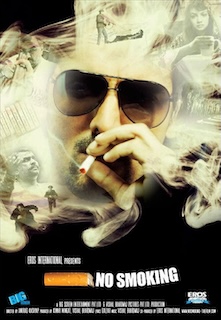
The Cut Fingers and the Conformist Soul: Unpacking the Surreal Horror of Anurag Kashyap’s No Smoking ending explained
Anurag Kashyap’s 2007 film, No Smoking, is not a cautionary tale about the health hazards of tobacco; it is a cinematic middle finger raised against the suffocating forces of conformity and censorship. The movie plot is far from a linear narrative, it is a neo-noir psychological thriller that deliberately fractures reality, submerging the audience in the nightmarish, surrealistic headspace of its protagonist, a man identified only as K (John Abraham).
Like a Rorschach test of cinematic despair, the film’s ending remains one of Indian cinema’s most debated conclusions. To understand it, one must embrace the central thesis, confirmed by Kashyap himself: Smoking is a metaphor for the individual’s absolute freedom and right to express, and the rehabilitation center, Prayogshala, represents the totalitarian authority that seeks to crush it.
Know the Deeper Meanings and Symbolism, Now Unmasking Censorship and Conformity in No Smoking
The Kafkaesque Prison: Prayogshala
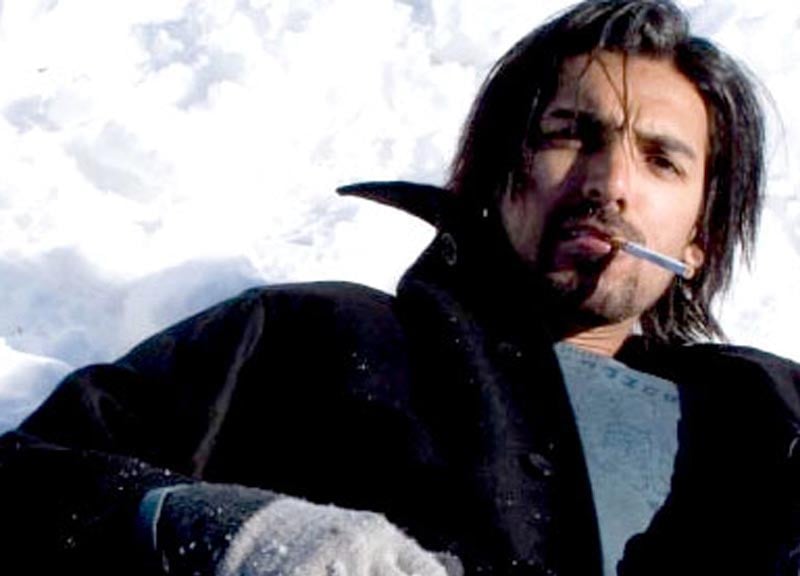
K begins the film as an arrogant, self-serving, narcissistic chain-smoker—a man defined by his own defiant agency and the mantra he mutters in the mirror: “Nobody tells me what to do.” When his wife threatens to leave him over his habit, he reluctantly visits the mysterious rehabilitation center, Prayogshala (meaning ‘Laboratory’), run by the sinister Shri Shri Prakash Guru Ghantal Baba Bengali Sealdahwale (Paresh Rawal).
This underground facility, operating beneath a confusing labyrinth of tunnels and a front called ‘Kalkatta Karpets,’ is immediately established as a terrifying, surreal hell, or Patal Lok. Its methods are not therapy; they are psychological manipulation and fear. The contract K is forced to sign is the surrender of his free will. His punishment for each transgression (smoking a cigarette) escalates:
- First Offence: Near-fatal asphyxiation of a loved one (a symbolic reflection of the harm the smoker inflicts).
- Second Offence: Loss of a finger.
- Third Offence: Death of a loved one.
The film’s entire midsection is K’s panicked, desperate attempt to escape an omnipresent surveillance system, which is a chilling nod to the totalitarian systems of Franz Kafka’s The Trial, where the protagonist is persecuted by an unseen, all-powerful authority for an unknown crime. In No Smoking, the crime is simply choosing one’s own path.
The Journey of the Soul and the Bathtub
The key to understanding the fractured plot lies in a single moment: when K is thrown into a water-filled jail cell following the tragic, second-offense death of his brother (who may or may not be a metaphorical extension of himself). Kashyap stated that from this moment on, the story ceases to be a straightforward chain of events and becomes the “journey of the soul.”
The bathtub, which K wakes up in multiple times throughout the film, is his metaphysical gateway—the calm center where his conscious and subconscious merge. His experiences—the Russian army base in a Siberian wilderness, the bizarre rituals, the confrontation with his friend-turned-cigar-dealer Alex—are not necessarily real events, but the internal agony, the torture, and the confusion of his soul struggling against the overwhelming force of conformity.
Read More: The Spy Ending Explained: Deconstructing the Tragic, Triumphant Ending of Paulo Coelho’s The Spy
The climax of this soul-journey occurs when K finally attempts to smoke a cigarette during the ‘Zero Minute,’ the brief window of annual freedom permitted by the Baba. Instead of the reward of a smoke, he finds himself back in the desolate Siberian room, a place that symbolizes an absolute, isolated regime of control. He plunges into a bathtub—his last act of self-reclamation—which drops him into a dark, subterranean prison.
Here, K’s soul—a spectral form representing his rebellious inner self—sees his body (the outward, conforming vessel) in a room across a glass partition. Baba Bengali is there, administering treatment. The soul attempts to communicate, but is told it cannot be heard because the body no longer listens to its inner self. Finally, the soul burns away, like the last ember of a cigarette.
The Final, Devastating Verdict
K then wakes up. He is in his own bed, his wife next to him, alive. The chaotic, horrific journey appears to have been an elaborate, self-inflicted nightmare designed to purge his addiction. The internal struggle is over, and the chaos has been replaced by a false, terrifying calm.
But the final shot delivers the true, devastating verdict: K is missing two fingers from his right hand.
Furthermore, these are not random fingers. They are the index and middle fingers—the very digits used to hold a cigarette. They are also the fingers an artist uses to hold a pen. As the filmmaker himself explained: the loss of those two fingers is the loss of K’s soul, his unique identity, and his freedom of expression (Kashyap, 2007). He has successfully quit smoking, but in doing so, he has been spiritually lobotomized. The price of conformity is his inner self.
The cycle is then completed: K is seen recommending the Prayogshala to a friend, not as a victim, but as a willing participant in the system that mutilated him. He has become a cog, an agent of the same repressive system that stripped him of his soul. He is free of the addiction, but enslaved to the authority. The film ends not with a victory, but with the terrifying triumph of societal power over the individual will.
However, No Smoking is a cryptic self-portrait of Anurag Kashyap’s early struggles with censorship and a hostile industry that sought to make his art palatable and obedient. K’s journey is the artist’s fear: that to succeed, or simply to survive, you must allow your most individual, rebellious, and free-thinking parts to be cut away by the Baba Bengalis of the world.The film is a poetic, horrifying exploration of what happens when you trade your defiant soul for a clean slate.