

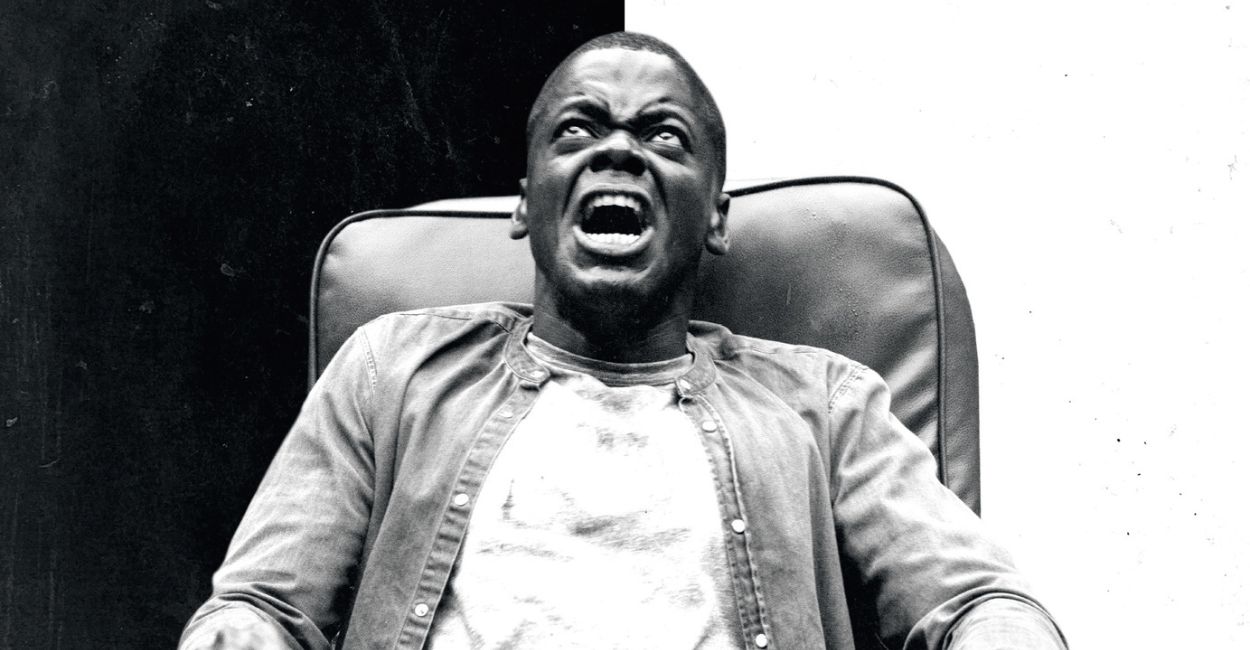
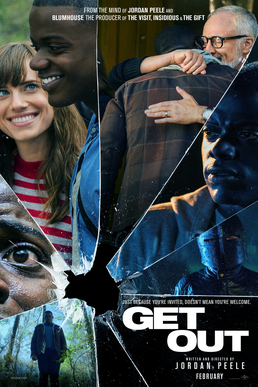
Get Out Ending Explained: Jordan Peele’s 2017 masterpiece, Get Out, is not merely a horror film; it is a meticulously constructed, venomously smart piece of social satire that uses the tropes of the genre to dissect the insidious nature of liberal, “post-racial” American racism. From the moment the protagonist, Chris Washington (Daniel Kaluuya), arrives at the Armitage family estate, the tension is not simply about what monster lurks in the shadows, but what subtle, systemic horror is hidden behind the polite smiles and back-handed compliments.
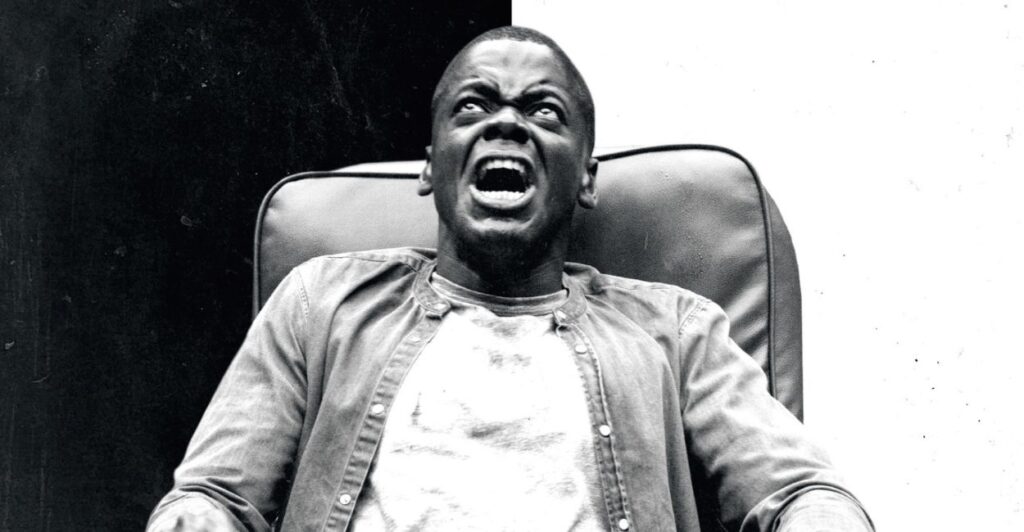
Yet, for all its revolutionary setup, the film’s final moments are arguably its most crucial, and certainly its most debated. The theatrical ending, where Chris is rescued by his best friend, Rod Williams (Lil Rel Howery), is a moment of pure, unadulterated cinematic catharsis, a rare and deliberate triumph for a Black protagonist in a horror narrative. To understand its power, we must first recognize the deep, painful cultural expectation it subverts.
Read more: The Diplomat Season 3 Ending Explained: Unpacking the Treacherous Betrayal
The Inevitable Dread: The Police Car Arrives
The climax is a blood-soaked ballet of justified rage. Chris, having been violently separated from his body and mind, breaks free from his hypnotic captivity, fighting his way out of the Armitage house like a man clawing out of a coffin. He kills the family—Dean, Missy, and Jeremy—in self-defense and in a desperate bid for freedom, each death a necessary severance from the system that sought to consume him.
The final confrontation takes place in the dark, rainy driveway. Chris, having inadvertently killed the re-animated Georgina (the Armitage grandmother) and having been shot by Walter (the Armitage grandfather, Roman), eventually strangles the truly monstrous orchestrator of the entire scheme: his girlfriend, Rose Armitage (Allison Williams). She is wounded, lying in the street, an architect of human bondage now facing her demise.
It is at this moment, as Chris is hunched over a bloodied white woman with the corpses of her family littering the estate, that the red and blue flashing lights arrive.
In any other film—indeed, in the reality of America—this moment is the protagonist’s death sentence. The audience, particularly the Black audience, is instantly plunged into the Sunken Place (Peele’s profound metaphor for marginalization and the silencing of Black voices) right alongside Chris. It does not matter that he is the victim; what matters is the visual evidence: a Black man standing over a white woman’s dying body. The audience is bracing for the sound of the police officer’s gun, the fatal assumption of guilt that is the true terror underlying the entire film.
The Twist of Triumph: “I’m TSA, man!”
The subversive genius of the theatrical ending is the bait-and-switch. The car door opens, and out steps not the embodiment of systemic oppression, but Rod Williams, the faithful, under-estimated TSA agent who had been desperately trying to warn and save Chris all along.
Rod’s appearance shatters the fatalistic narrative that horror films—and reality—have conditioned us to expect. It is a moment of Black brotherhood and liberation. In a world where the police and the establishment are often the agents of the system that consumes Black lives, Peele offers a powerful alternative: salvation comes from within the community. Rod, driving his unassuming TSA vehicle—a symbol of bureaucratic absurdity turned vehicle of justice—doesn’t ask questions. He doesn’t need an explanation of brain transplants, hypnotherapy, or the Order of Coagula. He simply says, “I’m TSA, man. I got all this. I’m taking you home.”
This ending allows Chris to “get out” in the fullest sense: he escapes the physical danger of the Armitages and the systemic danger of the police. It provides a rare and necessary release of tension, a victorious breath that the audience—having endured a film built on the agonizing tension of micro- and macro-aggressions—had earned. It asserts that there is hope, that there is justice, and that the story of Black trauma does not always have to end in inevitable tragedy.
The Chilling Alternate Reality
Peele originally shot a significantly darker ending, which is now available on the DVD release, and it serves as a powerful contrast to the theatrical version. Jordan Peele’s Get Out explores modern racial hypnosis and systemic control.
In the alternate ending, the blue and red lights belong to a genuine police cruiser. The police arrest Chris, who is dazed, confused, and can offer no coherent defense against the crime scene he created. Rose is left injured but alive, able to spin a tale that positions herself as the victim. The final scene shows Rod visiting Chris in prison. Chris is despondent and resigned. When Rod begs him to tell his story so they can prove his innocence, Chris simply says, “I stopped them,” confirming that his body may be free of the Armitages, but he is now fully trapped by the American justice system.
Peele ultimately changed the ending because he realized the audience, particularly the Black audience, had suffered enough, and that in the Trump era political climate, a small victory was a more powerful, galvanizing statement than a painful, realistic defeat. As Peele himself explained, the original ending fulfilled the film’s thematic prophecy, but the theatrical ending provided the audience with the relief they were owed (Peele, 2017).
The Enduring Metaphor of The Sunken Place
Ultimately, the ending is a physical manifestation of the film’s defining metaphor: The Sunken Place. The Sunken Place is the psychic prison, the marginalizing void where the victim’s consciousness is trapped, forced to watch their body be used and corrupted by another.
When the police lights flash, Chris is momentarily plunged back into that void—the fear, the systemic erasure of his side of the story, is instantaneous. When Rod appears, it is a breakthrough, a ray of light that pulls Chris not just out of the Armitage driveway, but out of the Sunken Place itself. He is given back his agency, his voice, and his future. Rose, left to bleed out, is simply the last piece of the monstrous system Chris had to defeat to truly “get out.” The theatrical ending is not just a happy ending; it is a revolutionary ending—a cinematic declaration that for once, the hero gets to live to fight another day, riding off with the only person who ever truly believed him.