

The Sins of the Father: A Psychological Deep Dive into the Lazarus Ending
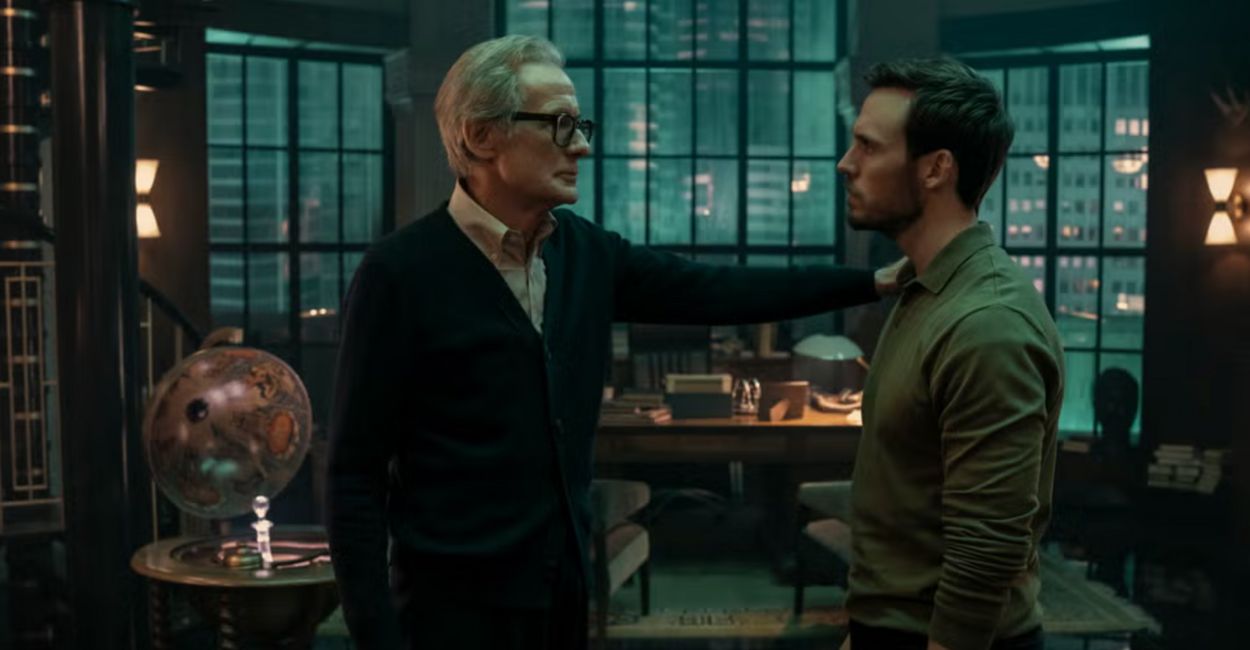
Harlan Coben is a master of the jaw-dropping twist, and his original Amazon Prime Video mini-series, Lazarus (2025), is no exception. Starring Sam Claflin as the titular psychologist, Joel “Laz” Lazarus, and Bill Nighy as his recently deceased, esteemed father, Dr. Jonathan Lazarus, the six-part thriller begins with a seemingly straightforward suicide that rapidly unravels into a labyrinth of cold-case murders, supernatural ambiguity, and the terrifying concept of inherited evil.The final episode is a relentless psychological assault, flipping the entire narrative on its head and leaving viewers with a chilling, cyclical truth about the Lazarus bloodline.
Harlan Coben’s Lazarus (2025) Ending Explained: The finale of the hit thriller dramatically reveals that Dr. Jonathan Lazarus (Bill Nighy), not a serial killer, was the true mastermind behind multiple murders, including his patients Cassandra Rhodes, Harry Nash, and Imogen Carswood, manipulating Detective Alison Brown to cover his tracks. Dr. Lazarus’s death, initially ruled a suicide, was, in fact, an coerced act after Brown confronted him. The series concludes with a horrifying cliffhanger, suggesting the cycle of violence continues through Laz’s biological son, Aidan, who is found with a bloody knife after a confrontation with Laz’s love interest, Laura.
The series initially positions Laz as an investigator haunted by the “ghosts” of his father’s former patients—visions which turn out to be either a manifestation of his trauma or, chillingly, the content of his late father’s secretly recorded therapy sessions. Laz believes Detective Alison Brown is the common thread, a corrupt officer using troubled patients as scapegoats. The truth, however, is far more dark and disturbing than any conspiracy theory.
In a climactic confrontation, Laz and his friend Seth pursue Brown, who is killed in a frantic chase after being hit by a bus. Before her death, however, she gives Laz a clue: an office tape. Playing the recording, Laz finally uncovers the monstrous secret his father took to the grave: Dr. Jonathan Lazarus was the serial killer all along.
Dr. Lazarus’s spiral into depravity began decades ago, following the unsolved murder of his daughter and Laz’s sister, Sutton. The trauma, he later confesses (via one of Laz’s visions), closed him off, fundamentally altering his moral compass. His killings weren’t random acts of malice; they were a form of “twisted mercy.”
He viewed certain patients—like the volatile Cassandra, the broken Harry, and even his lover Imogen—as being beyond help, destined only for pain or to inflict it on others. By killing them, he believed he was “freeing” them from their suffering and protecting the world from their potential danger. He then manipulated Alison Brown, a friend and police detective, feeding her false evidence to frame others—such as the serial rapist Arlo Jones and the disgraced Father Franklin Barnway—for his own crimes. Brown, believing she was putting away the true criminals, unknowingly became his accomplice in corruption.
Lazarus, The Truth Behind the Suicide Ending Explained
The mystery surrounding Dr. Lazarus’s death is the narrative engine of the entire series. Was it a suicide, or was he murdered as his “ghost” insisted? The final tape recording answers the question with a horrifying ambiguity.
Alison Brown, finally realizing the extent of her manipulation and the depths of Dr. Lazarus’s crimes—including the murder of Imogen—confronted him. She didn’t report him. Instead, she slid a gun across his desk, offering him a choice: take his own life, and ensure his secrets die with him. Cornered, knowing his life’s work as a respected psychiatrist was a monstrous lie, Dr. Lazarus succumbed to her ultimatum. He was found with a self-inflicted gunshot wound, but, as he told Laz in an apparition, “She killed me. She gave me no other choice.”
This scene underscores a key theme: while the act was a suicide, it was coerced, making Brown an accessory to his death. For Dr. Lazarus, it was the final, ironic application of his own twisted philosophy—ending pain and removing a danger (himself) from the world.
Read more: Nobody Wants This Ending Explained: Masterpiece Of Modern Romance?
Throughout the series, Dr. Lazarus’s suicide note is a persistent, baffling clue: “It’s not over,” accompanied by a drawing of a three-legged stool. The finale reveals its profound, chilling meaning.
The stool, as the “ghost” of Dr. Lazarus explains to his son, is a symbol—it represents a dolmen, an ancient tombstone associated with cyclical time and the afterlife. The message is a familial warning: The cycle of violence is not over; the darkness is in their blood. He confesses his fear that his son, Laz, would inevitably follow in his murderous footsteps, burdened by inherited trauma. The final sequence, however, suggests the pattern has skipped a generation.
The Final, Devastating Cliffhanger: Aidan’s Dark Inheritance
Just when it seems Laz has achieved a fragile closure—exposing his father’s sins, reconciling with his sister Jenna, and shedding the crushing guilt over Sutton’s death (which was actually caused by a stalker named Olsen)—the show delivers its ultimate, stomach-dropping twist.
Laz goes to the home of his burgeoning love interest, Laura. The house is a mess, a clear sign of a violent altercation. There, he finds a young man named Aidan standing over the scene, holding a bloody, serrated knife—the same type of weapon used to murder Dr. Lazarus’s assistant, Margot, earlier in the series.
The show had previously dropped a paternity bombshell: Aidan is Laz’s biological son from a past encounter with his ex-wife, Bella. Aidan’s final, chilling words to Laz are, “I’m sorry.” The implication is unmistakable: Aidan has killed Laura, cementing the terrifying truth of Dr. Lazarus’s final warning. The darkness has not ended with the father; it has been passed down to the grandson, opening the door for a potential Season 2 to explore the horrifying consequences of this inherited evil. The question remains: can Laz save his son, or is the Lazarus curse unstoppable?