
Contact
  • Privacy Policy
  • Contact
  • Career
  • Write for Us
ANA Times
No Result
View All Result
Thursday, March 5, 2026
  • Login
  • Home
  • Culture
  • Opinion
  • News
  • Sports
  • Lifestyle
  • Entertainment
SAVED POSTS
PRICING
Subscribe
ANA Times
  • Home
  • Culture
  • Opinion
  • News
  • Sports
  • Lifestyle
  • Entertainment
No Result
View All Result
ANA Times
No Result
View All Result

Why Women Feel Guilty for Wanting Space in Relationships

Samriti Dhatwalia by Samriti Dhatwalia
3 months ago
in Opinion
Reading Time: 3 mins read
7
0
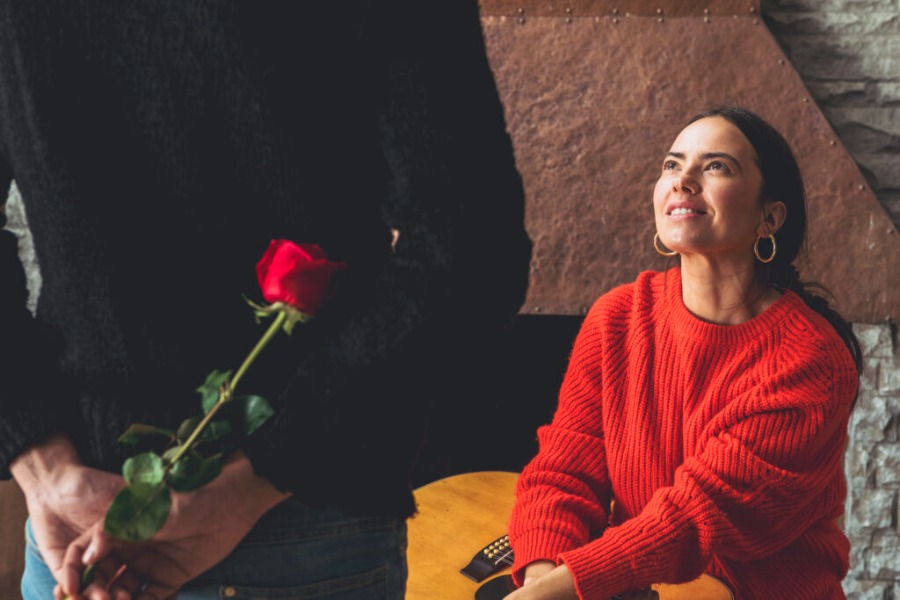
Men holding Rose

#image_title

5
SHARES
Share on FacebookShare on Twitter

The persistent lesson for women is to stay available, making the need for space feel like a betrayal. This cultural guilt, rooted in being conditioned to prioritize connection over autonomy, forces women to fear disrupting their identity as the caregiver. Space is a psychological need; women must unlearn the guilt and partners must unlearn the entitlement. How can societal norms shift to recognize a woman’s need for solitude as an act of strength, not selfishness.?

RELATED POSTS

The Honesty Crisis: Why White Lies Are Increasingly Undermining Our Professional Integrity and Personal Relationships Worldwide

Career Pathways in Major Science Disciplines

How Smartphones Reshaped Human Connection and Reading Habits

Women have been taught many things about love, but perhaps the most persistent lesson is this: good women stay available. Available to soothe, to listen, to give, to adjust, to anticipate, to be emotionally present at all times. And this is precisely why, even today, so many women feel an overwhelming sense of guilt when they ask for space in a relationship—be it a few hours of silence, a solo weekend, or simply emotional breathing room. The guilt is not natural. It is cultural.

From girlhood, women are conditioned to value connection over autonomy. You can trace it back to the way daughters are raised—praised for being “considerate,” taught to share their toys, asked to compromise first in sibling fights, instructed to keep the family peace. Boys are told to explore the world; girls are told to maintain the home. This early emotional labour follows women well into adulthood, especially into romance. To want space is to disrupt the very identity society has built around them: the caregiver, the nurturer, the always-there partner.

In heterosexual relationships, this pressure intensifies because men are often not taught to carry emotional responsibility at the same depth. When a woman asks for space, she is not just taking a boundary—she fears she is creating a void her partner won’t know how to fill. The guilt, therefore, isn’t only about wanting time alone. It’s about worrying she is failing her role as the emotional anchor. Women are told, subtly and overtly, that if a relationship struggles, it is because they didn’t hold it together hard enough.

Pop culture has also romanticised the idea of constant togetherness. Movies portray “true love” as two people who want to be around each other endlessly. Female characters who seek solitude are often labelled cold, complicated, or “difficult to love.” Even modern Instagram therapy culture—ironically meant to empower—regularly pushes the idea that love requires continuous communication and emotional exchange, creating yet another performance standard for women to live up to. Wanting to be alone becomes something you must justify, defend, or soften with disclaimers: It’s not you, it’s me. I just need time to recharge. I love you, I promise.

But needing space is not a betrayal. It is a basic psychological need. Solitude fosters reflection, creativity, and emotional regulation—it helps individuals return to their relationships more grounded and present. Yet for women, wanting even a small slice of independence can feel radical. Many fear being misunderstood as disinterested or unloving. Others fear conflict. Some fear abandonment. And almost all fear being labelled selfish.

Part of this fear also comes from how women are socialised to experience their own desires—with caution. A man who wants space is seen as stoic or “sorting his head out.” A woman who wants the same is often viewed with suspicion. Is she bored? Is she done with him? Is she hiding something? The gendered double standard makes women second-guess themselves before they even articulate the need.

Compounding this is the internal pressure to be the “perfect girlfriend” or the “cool partner.” She should be independent, but not too independent. She should be loving, but not clingy. She should be emotionally supportive, but never burdensome. This constant tightrope walk makes asking for space feel like stepping out of line, even when it is necessary for her well-being.

But perhaps the biggest reason women feel guilty is this: they have rarely been given space without punishment. Many women carry memories of partners who sulked, questioned them, accused them of drifting away, or escalated into insecurity the moment they pulled back even a little. Over time, women learn to avoid the emotional cost of requesting space by simply not asking for it.

The truth is, healthy relationships depend on both closeness and distance. Intimacy thrives when individuals have room to return to themselves. Space is not a threat—it is an ingredient. Women do not need to apologise for needing what every human being needs: time, autonomy, solitude, and self-presence.

The work now is twofold. Women must unlearn the guilt, and partners must unlearn the entitlement. When a woman wants space, she is not pulling away from love. She is simply pulling inwards, gathering herself so she can come back not as a drained version of who she is—but as someone whole, rested, and real. And that is not selfish. That is strength.

Tags: CultureCutural guiltEmotional labourGuiltyOpinionrelationshipsWomen
Share2Tweet1
Samriti Dhatwalia

Samriti Dhatwalia

Related Posts

The Honesty Crisis: Why White Lies Are Increasingly Undermining Our Professional Integrity and Personal Relationships Worldwide
Opinion

The Honesty Crisis: Why White Lies Are Increasingly Undermining Our Professional Integrity and Personal Relationships Worldwide

January 22, 2026
Explore the diverse career pathways and educational scope of major science disciplines, including Biology, Chemistry, Physics, Mathematics, and Computer Science. Learn how interdisciplinary research and higher education drive innovation and solve global challenges in today's evolving professional landscape.
Science

Career Pathways in Major Science Disciplines

January 21, 2026
A reflective essay on how smartphones have quietly transformed human interaction, reading behavior, education, and daily life—questioning whether mobile technology truly represents progress or silent isolation.
News

How Smartphones Reshaped Human Connection and Reading Habits

January 14, 2026
Choice Capsule explores the power of choice, chance, and change in shaping life, careers, productivity, and personal growth—offering a practical framework for better decisions, resilience, and fulfilment.
Culture/Identity

Choice, Chance, and Change: The Role of Decision-Making in Life Transformation

January 11, 2026
Unlocking The Bakker Secrets: A Radical Ancestry Journey Into Hidden Heroism, Taboo Legacies, and Untaught History.
Legacy

Unlocking The Bakker Secrets: A Radical Ancestry Journey Into Hidden Heroism, Taboo Legacies, and Untaught History.

December 27, 2025
Nick Reiner's Schizophrenia and medication changes affect him, worsening his overall condition.
News

Nick Reiner’s Schizophrenia Diagnoses & His Medication Changes

December 21, 2025
Next Post
How Human-Centered Leadership Can Solve the Staffing Crisis

Human Brains Designed for Focus, not for Multitasking – Be Productive by Monotasking

Please login to join discussion

Recommended Stories

OMG 2 is a movie that talks about vulgar and demotivating parents at the beginning. However, surprise audience at the end.

OMG 2 movie review: is a Parents much watch movie?

December 9, 2025

Hindi Poem “Not My Intention” by Guest Poet Ashish Rasila

June 25, 2021

Your Ultimate Guide to Upcoming Movies in Oct 2025: From Rock Biopics to Anime Epics & Terrifying Thrillers

December 9, 2025

Popular Stories

  • Read the full 1200-word review of Dhurandhar (2025) — Aditya Dhar’s grand, myth-infused action epic starring a powerhouse cast. Release date, themes, music, cinematography, and verdict inside.

    Dhurandhar Review: A Mythic Modern Epic

    71 shares
    Share 28 Tweet 18
  • Eugenia Cooney 2025: The Anorexic Influencer

    52 shares
    Share 20 Tweet 13
  • Popular 80+ OTT web series actress names: Leading Stars

    45 shares
    Share 18 Tweet 11
  • Top 40+ Ullu Web Series Actress Names [Updated]

    43 shares
    Share 17 Tweet 11
  • Customer Care Numbers for VI, BSNL, Jio & DTH

    35 shares
    Share 14 Tweet 9
ANA Times

ANA Times (Asian News & Analysis), your trusted source for in-depth news analysis, trending stories, expert insights, and cultural perspectives across Asia and globally.

Recent Posts

  • होली और युवकों की छिछोरी – बदलती होली की सच्चाई
  • Iran’s Supreme Leader Khamenei Killed In Strikes
  • The Morning That Turned ‘Gulf’ Into a Regional Warzone

Newsletter

© 2025 ANA Times. All Rights Reserved.

Welcome Back!

Sign In with Google
OR

Login to your account below

Forgotten Password?

Retrieve your password

Please enter your username or email address to reset your password.

Log In
No Result
View All Result
  • Lifestyle
  • Sports
  • News
  • Opinion
  • Entertainment
  • About Us
  • Career
  • Write for Us
  • Privacy Policy
  • My account
  • Home
  • Culture
    • Fiction
    • Poetry
  • Login
  • Cart

© 2025 ANA Times. All Rights Reserved.

Are you sure want to unlock this post?
Unlock left : 0
Are you sure want to cancel subscription?