

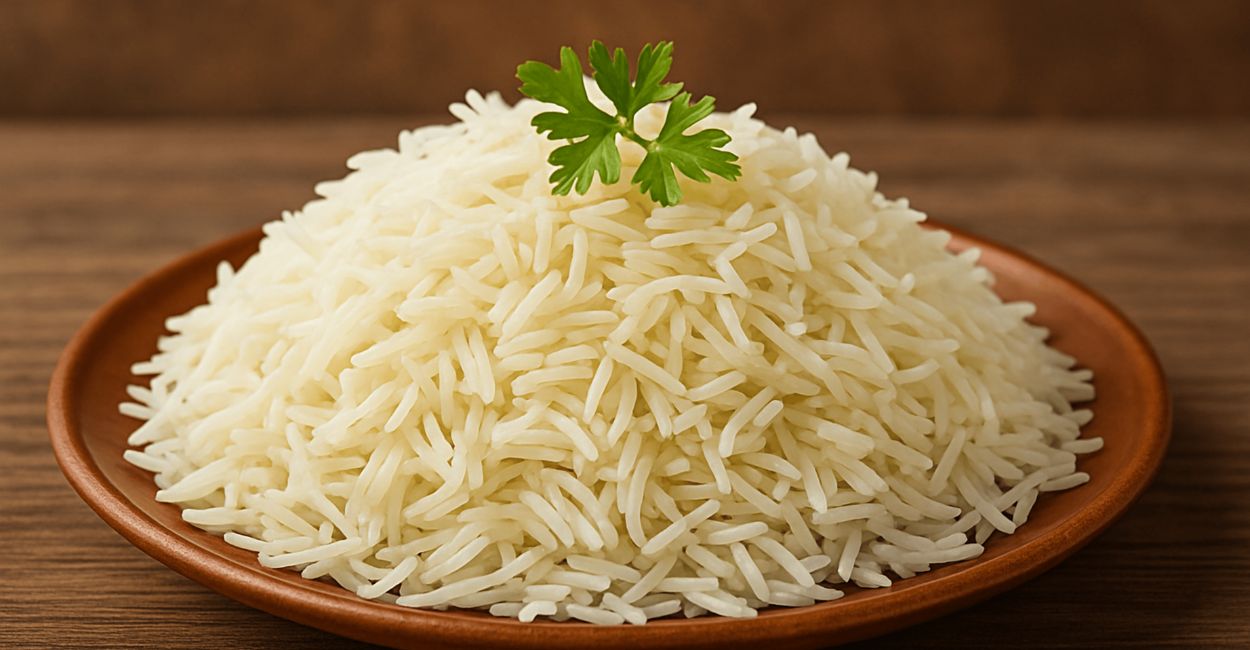
I learned to love rice at my mother’s dining table, where a steel bowl of it sat at every meal. Some days, silky kadhi cascaded over it like liquid gold, pooling into rivulets of tangy warmth. Other days, rajma tumbled in, each bean a tiny jewel glistening in thick, spiced gravy. There were dals too: some as light as a whisper, others as rich and earthy as soil after rain. But my favorite pairing was always my mother’s Spinach Dal.
At home, we called it Sapaita, a name born from the colloquial blend of saag (greens) and paita (softened texture). Rooted in North Indian kitchens, Sapaita was never just spinach. It was a medley of seasonal greens: soa (dill) and bathua (white goosefoot) folded into simmering split urad dal. Each ingredient brought its own depth: bathua’s faint earthiness, soa’s delicate fragrance, spinach’s familiar comfort. Rich in iron, protein, and fiber, Sapaita wasn’t merely food. It was sustenance. A quiet healer. A whisper of wisdom passed down through generations. And like all things that truly nourish, it was made slowly, stirred with care, and served warm, its taste carrying the unmistakable comfort of home.
This was childhood in a bowl. I didn’t just eat it. I absorbed it. It wrapped around my insides like a soft embrace.
Even now, in dreams, I find myself pulled back to that kitchen. The air is thick with steam curling into the rafters, carrying the sharp scent of mustard seeds popping in hot ghee. The clang of metal against metal rings through the room as my mother moves with practiced ease: rinsing, measuring, stirring, her hands fluent in a language older than memory.
The split urad dal, pale and unassuming, swells in its pot, softening into something smooth, something whole. A fistful of leafy greens is thrown in, darkening as it wilts and surrenders to the heat. Then comes the hiss of the tadka, ghee shimmering, mustard seeds bursting like firecrackers, hing and garlic sizzling into golden perfection. Dried chilies curl and blacken, releasing a smoky whisper that makes my nose tingle and my mouth water.
In my dream, I sit cross-legged in the corner, watching the emerald Sapaita pool into rice. Two parts Sapaita, one part rice. The ratio never changes. My mother picks out the roasted garlic to place on top of my bowl because she knows I love it best. The first bite is everything: garlic sharp against mellow lentils, heat lingering on my tongue, brightness cut through by a squeeze of lime.
Now, in this rented house, I make Sapaita not because I crave it, but because I crave her. Yet it is never the same. Perhaps it is the air. Perhaps it is the silence where her voice once hummed half-remembered songs over the pressure cooker. Or perhaps it is only me, trying too hard to recreate something that cannot exist outside of home.
Rice was what I was raised on. Rice is what I carry within me, a quiet inheritance of warmth and surrender. It is patient, forgiving. It yields. It absorbs what surrounds it, yet remains itself. At home, even after a heavy meal of stuffed parathas, there was always space for a spoon or two of rice. It was never about hunger. It was about honoring the meal, about saying yes to the hands that had cooked it, even if it meant embracing the heaviness that followed. Those last bites were what completed the experience of eating at home, what turned food into comfort, what made a meal whole. You simply mixed the rice with whatever was left on your plate and let it dissolve on your tongue, as if surrender itself could be tasted.
I always ate my rice slowly, carefully, as if each grain carried something sacred. When I liked a dish too much, I abandoned the spoon altogether. With Sapaita, I always waited for the bowl to cool just enough before pulling up my sleeves, dunking my fingers in, and savoring each bite, licking my fingers clean. From the kitchen, mid-stir, Mom would steal glances at me. A slight tilt of my head, a knowing smile, and she understood. It was perfect. Always.
Now, Dad tells me she doesn’t make Sapaita as often. Maybe because he eats it with a spoon.
The first time I sat at a table that was not my own, my plate was filled with bread instead of rice. Dry, thick, unfamiliar. Others tore it easily, dipped it into olive oil and soy with practiced grace. I tried to mimic them, but my hands were clumsy. I chewed, but it did not go down easy. That feeling, the quiet discomfort of not knowing how to belong, never left me.
Some people arrive in the world knowing how to claim space, how to tear apart what is given to them and make it their own. But I have always found it easier to dissolve, to bend, to slip between cracks unnoticed. I have always been a rice person.
When Mom calls me now, I lie. I tell her I made the best Sapaita for lunch, though it was a pale imitation. I say I followed her recipe, though what I truly miss is the one thing no recipe can capture: her hands feeding me.
Until I was twenty-four, my mother hand-fed me breakfast and lunch almost every day. She would sneak in extra spoonfuls of rice when I wasn’t paying attention, pressing the grains down with her fingers, pouring hot Sapaita over them, swirling in ghee until it all melted together. I lied, insisting it was too much, but she lied back, smiling as she said it only seemed a lot because the bowl was small. What I didn’t realize then was that those extra spoonfuls were never about filling me. They were her quiet way of giving more, of making sure the meal was complete. To finish the rice was to accept her love, to let the heaviness sit inside me as proof that I had been cared for. Feeding me was her unspoken intimacy, a ritual I took for granted until I found myself in an unfamiliar kitchen, forcing down something that barely resembled home.
When I left, I tucked a small bag of rice into my suitcase, as if carrying it would anchor me, as if it would keep me from drifting too far. On nights when the silence was too sharp, I boiled a pot of water and let the grains unfurl in the heat. With some leftover Sapaita, I sat by the window, bowl warm in my hands, steam curling against my face like an embrace. The first bite was always the taste of something that did not ask me to fight.
I have eaten in many places since then. Tried to belong in many places. Learned to tear, chew, and swallow without thinking too much. Learned the language of those whose hands never doubted what to do. But when no one is watching, I still reach for the rice. I still take comfort in its softness, its quiet, its willingness to hold everything without resistance.
I wonder where I will be next, sitting at another table, stirring Sapaita into rice with the same slow movements. I wonder if my loneliness will taste the same in another city, another life. But one thing I know: I will still make rice.
Every evening, as the sky darkens and the world folds into quiet, I will stand by the stove and wait for the water to boil. Rice has taught me that not all strength is loud. Some strength lies in yielding, in absorbing, in carrying the flavors of others while remaining whole. There are those who tear the world apart with their teeth, who claim and remake what is given to them. And there are those who soften it, who take it in, who let themselves become part of something larger.
Not everyone is made to fight. Some of us were made to endure. Some of us were made to comfort.
Some of us were made to be rice.