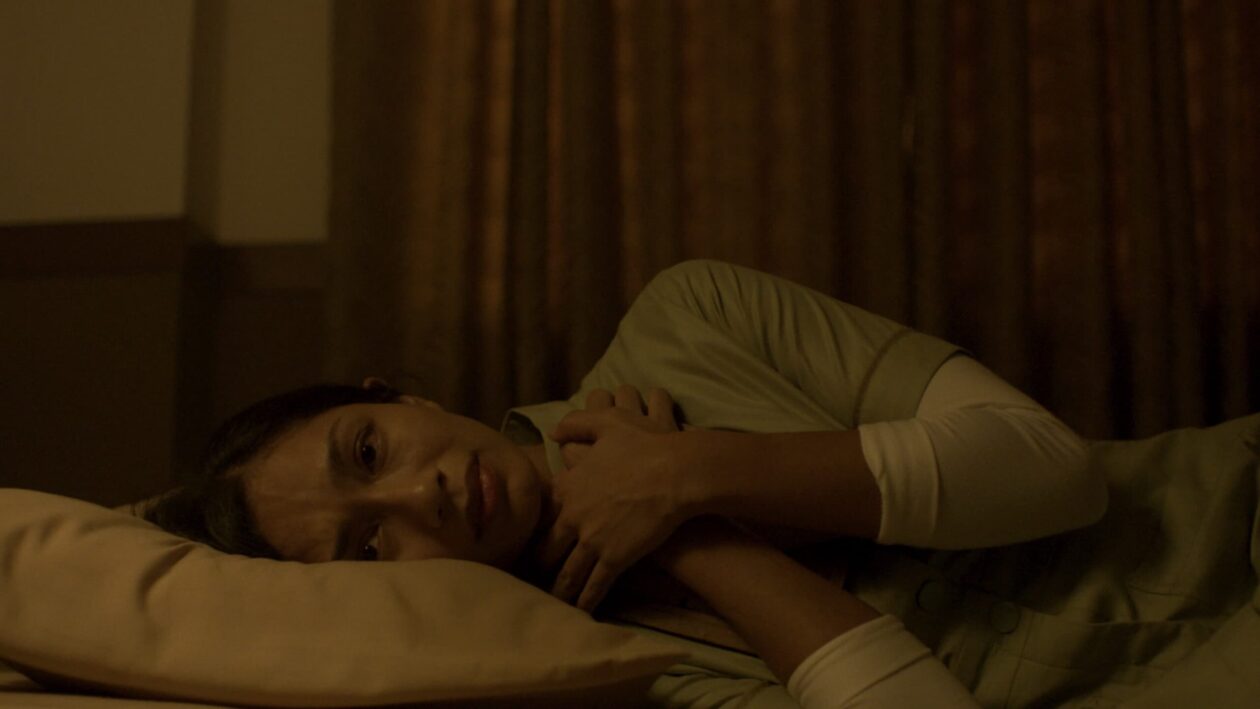


A long-standing feud between a friend and his father has provided me with extraordinarily rich articulations about emotions and the social contract. Reflecting on our own habits is a key step in changing how we interact with people who are spiritually chaotic. I don’t mean that we should evaluate the horrors inflicted on our lives and infuse our actions with a hawk-like sense of injustice to extrapolate further for external judgments. I want us to find spaces within ourselves that reject our fundamental desire to seek witnesses.
The theater of witnessing is off-limits, thus the habit of being scrutinized and watched while we go about seeing things is likewise a self-parodying neurosis. I proceeded to inform my friend that no matter how angry he is at his dad, somewhere his father is still taking care of him after his mom passed away. On odd days, my friend felt like burning his house down, purifying it by fire but preserving the destruction by announcing it to me. He hesitates to accept the reality of his impulses and whimpers with a nod, giving in to the collective father-figure authority that stands in hysterical opposition to his queer identity. Most of the time, I hate how Western left politics terrorizes family values and how privileged Hindus mimic them even while hanging under colonial influence. Any discomfort within the family triggers a host of opinions that costume as maturity but risk an open heart for radical vulnerability. We simultaneously criticize our indulgences and our attempts at restraint while reluctantly giving in to our desires for “freedom,” which ultimately leads to feelings of emptiness and despair. Parodying memories of who hurt us in the family intrude upon us, while the useful lessons lie and wait as future events, needing no recall but life itself.
I allowed my friend to mourn the emotional distance between him and his father and tended to his wounds the way believers would tend to their idols. He said, “My father scolded me like crazy when he found out I stole some cash from office. He could never love me!!” I recount what escalates when we are angry at our families too—threats of violence, unimaginably hurtful words slingshot at each other, and self-imposed bodily harm. All have developed in me a habit of recounting the brutality first, as if to confront and process the pain before acknowledging any fleeting moments of harmony. A part of me has always wanted discreet ways to flaunt the tough magic of domestic living.
I saw my dad spend half of his life working in different districts of the state to bear responsibility for a culture of public bureaucracy. A government servant who acts out in ways the state demands. Mom had to become even more vigilant as the declining opportunities for both men and women after the Assam Language Movement dissipated everyone. The rising cost of living, compounded by ethnic political violence and the policing of gender roles, corroded everyone’s community life. My father’s talks of the heart have less to do with hyperbolic language and more to do with truth from his experiences; mostly polite, sometimes restrained. The journey from the fields and villages to the city has not been easy at all. He taught me early on to see and name the problems for ourselves so that we, as Indigenous Assamese people, don’t have to be masochists forever, looping, suffering, and snitching until we lose the pleasure of diving into the ungraspable complexity of always serving and being obedient to people from other states. The state of Assam, India is known for its hospitable nature as if we are emerging from a long infancy held in place by different coded policies of mainland India. His concerns were about the erosion of kinship, now replaced by aesthetic kinship rotting inside superficial glamour and social capital.
I have long pondered the dimensions, constraints, and potential of what we call home. I am deeply engaged in exploring ways to endure and prosper despite personal adversities and state-imposed hardships. For years, I frequently dreamt about how my mom and dad built an unwavering devotion for their relationship amidst the persistence of forceful “arranged” marriage banters. At home, I was always curious how my mom fought her own family and the lies she had to manufacture to be safe enough to pretend everything was going smoothly. Grandfather couldn’t ‘give’ his daughter until my dad secured the government post, and on top of that my father was already a poor farmer’s son who also couldn’t secure enough resources due to corrupt, racist bureaucratic practices of Assam’s administration of the ’90s. What draws two people together, and what keeps them apart? I find myself repeatedly returning to these profound questions. Both of my parents are from the upper and lower districts of Assam, which meant distances of kilometers had to be coded and remapped by love letters, occasional meet-ups somewhere in the center, or a mythical messenger who would vanish suddenly into thin air.
The purest expressions of love are unguarded, requiring no adjectives or embellishments to affirm their existence. Here were Mom and Dad once more with secret heartbeats; embodying love itself and asking for nothing in return even amidst dangerous clowns who think they can tame the circus animals well. Their linkages were as much visceral as intellectual. So when I look at their pictures together from the marriage album, sometimes I smile a lot or listen to a playlist of R&B to prep for this blessing. This may be called divination, but it’s more of a transition, to a healed state. What is this image teaching me besides what I see? What occurs in the image’s anticipatory space—what could happen next, or what has happened previously? What do I know that the subject does not, and how can I impart this knowledge? What is static, and what is moving? Why was this photograph chosen? Why was it preserved? A home built on love, after years of hiding that love in shame keeps my family tethered to earth a little longer. Love, demanding that we make the most of it, doesn’t ask to be sought; it is a feeling that must be awakened to and given priority over all of the counterforces that seek to dull and scramble it. The world surrounding us practiced crass yearning, overfixating on an unnatural lack so much that all sorts of fraud compensated to break these two lovebirds, whose shared transparency and capacity to love beyond ultimatums helped me learn to be queer in every instant and instinct.
Inheritance invariably begets a sense of anxiety and more so when you slip out of lineage by being queer. Many people worry about the image of engulfment when it comes to family responsibility and amuse themselves by lying much about their accolades as if they started from a hard place and declare themselves a winner of a race everyone is losing. Burdens of close ties, pressure, and grief build up, and unmet needs comprise the internal weather of our minds. They trick us into believing that we should pursue a ‘community’ of ‘pure souls’ who will catapult us into safes spaces. Betrayal has no ethical justification. You learn again and again that the nostalgia of your childhood cannot be compensated for by new entanglements and dysfunctionality will follow you till you wake up from that dream of a pretend good cultural childhood. Sometimes we grow independent too quickly, which turns to guilt and, at a distance, hope that we should be able to posthumously forgive our parents for shouting at us, for not learning things early on. We feel trapped by our family at times, but they also provide us with purpose and a sense of identity. They can never be categorically rejected.
I’m aware of families where eyes, noses, and cheeks wage a battleground, where coming near an alcoholic father feels like an explosive reaction, where mothers don’t really share blood with their children but draw blood from each other. These strategies for tearing each other apart echo mutual violence, which drives me to acknowledge the conversational pinches and punches that frequently occur within families. Some of these brutalities result from trauma, hurt, and anger that may be transformed into love and care, that’s why helping and harming frequently merge into one another. I say this not to make carnage palatable or to question if there is any caring familial act that comes without a sacrifice.
I want to foster a new kind of generational wealth—one that prioritizes dense relational intimacies and shared knowledge over material abundance. Our heart’s life-giving, blood-pumping function is imprisoned by the ribcage. Just like the pouting heart, our relationships can be our own kind of prison. Our heart is owned by us, appearing stuck within the confines of this affair of bones and flesh, locked into this affection for the body. Some days we will be vacillating between ‘let me be’ and ‘be mine,’ and there shall be a subtle lesson in making a concerted effort to be vulnerable. Society is a little desperate to fix things quickly so that we remove ourselves from shame of our homes and intolerable dialectics that freeze our motion and emotions. Maybe we need to do better when love is threatened and take a humble bow.