

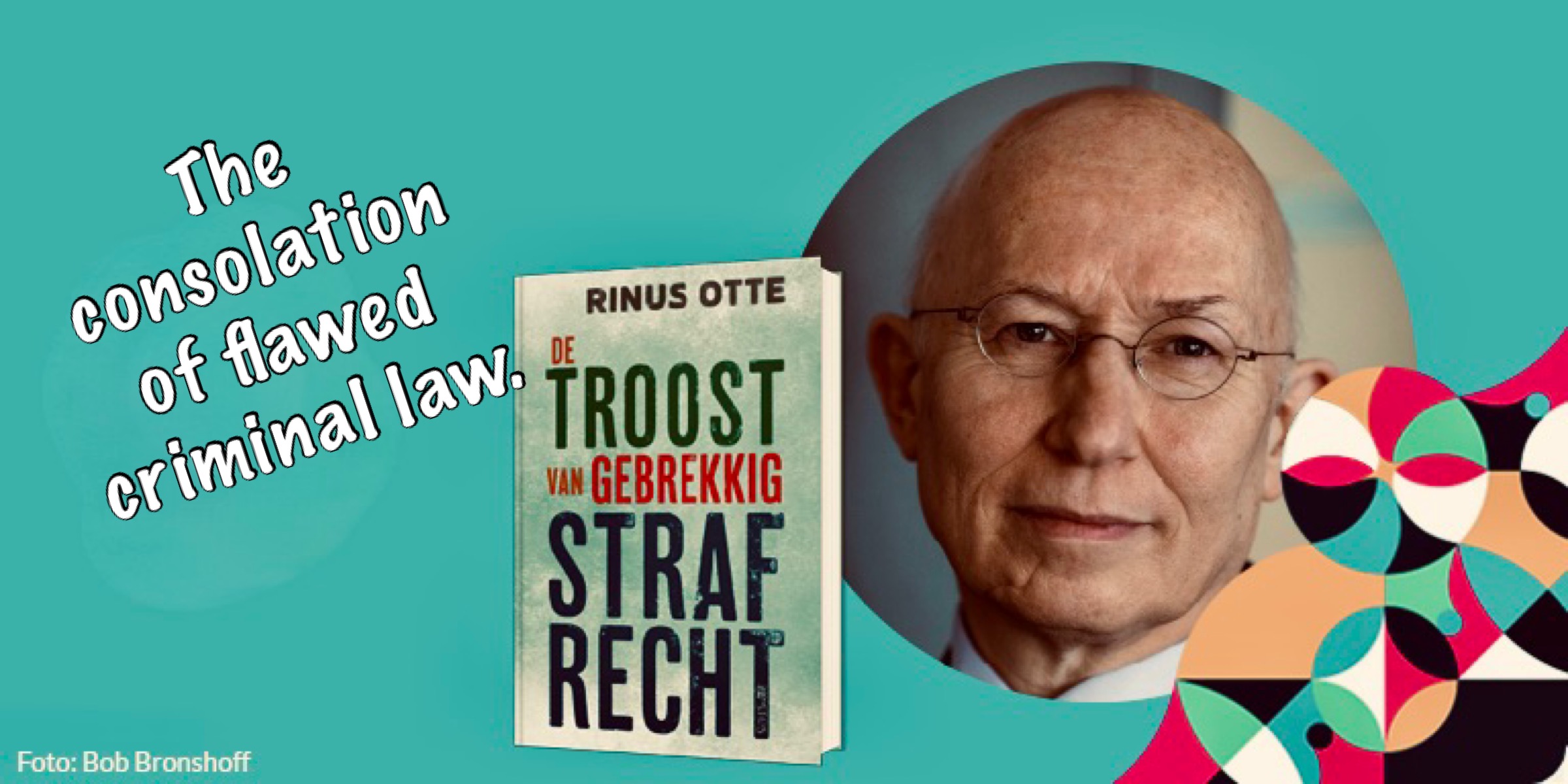
Judges face challenges in achieving true neutrality, as biases and subjective views impact fair sentencing, explored in Rinus Otte’s The Consolation of Defective Criminal Law.
The quest for justice is a fundamental aspect of any society. At the heart of this pursuit is the expectation that judges must remain neutral, basing their decisions solely on the facts presented in each case. However, as discussed in the book The Consolation of Defective Criminal Law by Rinus Otte professor, former criminal judge, and chairman of the College of Procurators General responsible for the Dutch Public Prosecution Service—this ideal of neutrality is often more complex than it appears.
The Double Standard in Judging Mistakes
One of the most thought-provoking insights from Otte’s book is the double standard that often exists in how we perceive mistakes—our own versus those made by others. If you make a mistake, it’s easy to rationalize and forgive yourself. But if someone else commits the same error, we may demand severe punishment. This discrepancy highlights a fundamental challenge in the justice system: ensuring that judges remain impartial and do not allow personal biases to influence their decisions.
Otte’s work emphasizes that punishment and reward have become ingrained in our societies, with growing calls for equality in how these are administered. This trend underscores the importance of consistency in the legal system, where similar crimes should receive similar penalties, regardless of the individuals involved. However, the complexity of human nature and the subjectivity inherent in each case make this a difficult standard to achieve.
The Impossible Ideal: Can Judges Truly Remain Neutral?
Judicial neutrality is a cornerstone of fair trials, yet Otte argues that achieving true neutrality is nearly impossible. Can judges make completely impartial judgments? According to Otte, every judge brings to the courtroom a lifetime of experiences, beliefs, and perceptions that inevitably shape their interpretations of the cases before them. This reality complicates the expectation that judges should be entirely neutral.
One of the more unsettling points raised by Otte is the inherent challenge in assessing the fairness and reliability of a defendant. Is it possible to determine guilt by simply looking into a person’s eyes? While this might seem like an idealized notion, the reality is far more complex. A judge’s perception is influenced by personal biases, making it difficult to remain entirely objective. This subjectivity can lead to disparities in sentencing and the interpretation of evidence.
The Role of Personal Values: How Strong Are Your Beliefs?
Judges, like all individuals, have their own set of values and beliefs that have been shaped by their experiences. How strong are your values and beliefs? Otte challenges legal professionals to continually test their perceptions for incompleteness, recognizing that their judgments are often influenced by these internalized values. This introspection is crucial for ensuring that decisions are based on facts rather than personal bias.
The legal system demands that a person can only be convicted if the facts presented are legally sufficient and convincing. But this raises a critical question: Can facts be interpreted the same way in every case? The subjective nature of human perception means that different judges might interpret the same set of facts differently, leading to inconsistencies in sentencing and justice.
Self-Defense and Justification: Can You Kill in Self-Defense?
One of the most complex issues in criminal law is the concept of self-defense. Can you kill in self-defense? Otte examines the scenario of a man who murders his wife after allegedly being bullied by her for years. This raises difficult questions about the legitimacy of self-defense claims, especially when they are not supported by sufficient evidence or witnesses. In such cases, can a judge objectively determine whether the act was truly one of self-defense, or does personal bias cloud their judgment?
The book highlights that claims of self-defense without substantial evidence often fail to hold up in court. Yet, the subjective nature of these cases makes it challenging for judges to determine the appropriate course of action. The law must balance the need to protect the accused’s rights with the responsibility to ensure justice for the victim.
Interpreting Evidence: What Constitutes Sufficient Proof?
Determining what constitutes “sufficient and convincing evidence” is another significant challenge in the justice system. Can anyone get a lenient sentence if there is enough evidence? The interpretation of evidence can vary greatly between cases, and what one judge might consider sufficient, another might find lacking. This subjectivity further complicates the pursuit of consistent and fair sentencing.
Otte’s book also addresses the issue of extreme necessity as a defense. Who determines whether a suspect acted out of extreme necessity? The difficulty lies in interpreting the suspect’s motives and the context of their actions. These interpretations are inevitably influenced by the judge’s own experiences and beliefs, leading to potential disparities in sentencing.
The Evolution of Criminal Law: Can Society Grow Without Overstepping Legal Boundaries?
As society evolves, so too must the laws that govern it. Otte raises the question: Can the world grow fast enough without violating legal boundaries? The development of society often requires pushing the boundaries of existing laws, which can create tension between progress and legality.
Otte suggests that while laws are designed to protect the majority, exceptions will always exist. This brings to light the challenge judges face in balancing the need to enforce the law with the understanding that sometimes, breaking the law might be justified in the pursuit of greater societal benefits. This tension between legality and progress underscores the complexity of the judicial role.
The Purpose of Punishment: Should It Lead to Repentance?
The ultimate goal of punishment in the criminal justice system is another area of debate. Should punishments lead to repentance? Otte argues that for punishment to be effective, the individual must recognize its legitimacy. However, this is often not the case, leading to frequent appeals by those who do not agree with their sentences.